 →


Cheater’s Morning Buns: Orange Zested, Cinnamon Sugared, Delicious and Flaky as Ever
 By Alexandra Stafford
—
10/24/2026
This post may contain affiliate links. Please read my disclosure policy.
Popularized by San Francisco’s beloved Tartine, morning buns traditionally require a lot of work. Below you’ll find a version made with cheater’s croissant dough that takes no time to mix and produces a morning bun as flaky and delicious as ever.
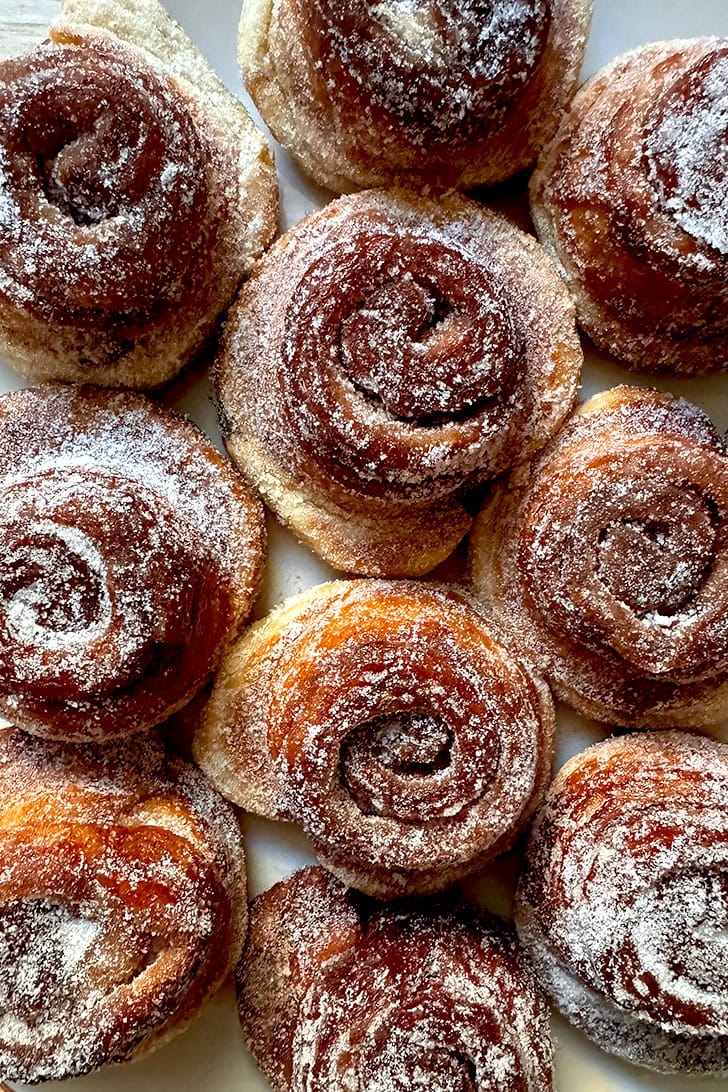
When I first visited Tartine nearly 20 years ago, I bought the cookbook so I could try making at home all the treasures I sampled: croissants, quiche, bread pudding, scones, croque monsieur, and, of course, morning buns.
Imagine my shock — and the world’s! — to discover the morning bun recipe didn’t make it into the book. Imagine my excitement — and the world’s! — to find the recipe 15 years later in the book’s revised edition.
As you can imagine, Tartine’s recipe calls for a traditional laminated croissant dough, an effort I am unwilling to make. And that’s because I know how beautifully this cheater’s croissant dough works to create that buttery, flaky texture. Below you’ll find a recipe that pairs the cheater’s dough with the Tartine filling — a mix of sugar, orange zest, and cinnamon — and final sugar dusting.
If you are unfamiliar with the cheater’s dough, know that it takes no time to pulse together in the food processor or to mix by hand, but it does still require some fridge time as well as a few sets of rolls and folds. I’ve included some timing notes in the recipe box to help you plan.
Orange-scented, cinnamon-sugared, these morning buns are heaven, like a cross between a croissant and a cinnamon roll, perfect with a cup of black coffee. Find step-by-step instructions below.
How to Make Morning Buns, Step by Step
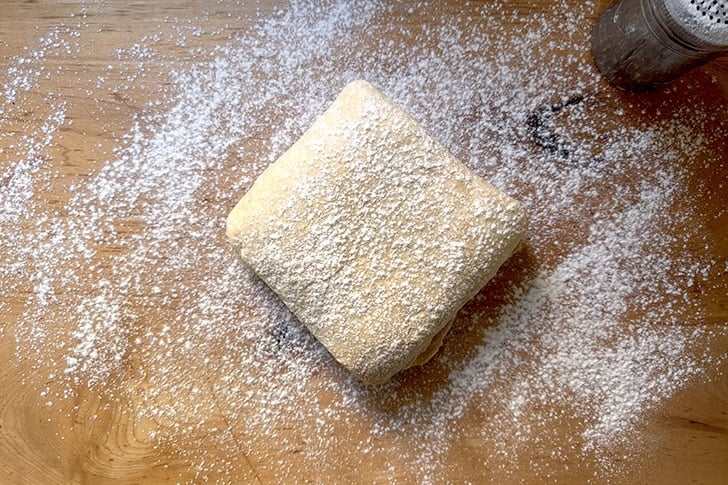
This recipe starts with this cheater’s croissant dough:
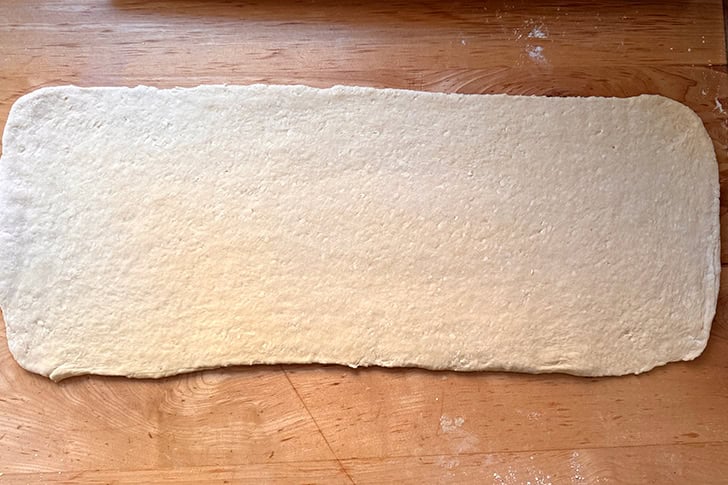
First, you’ll roll it out into a 24×10-inch rectangle:
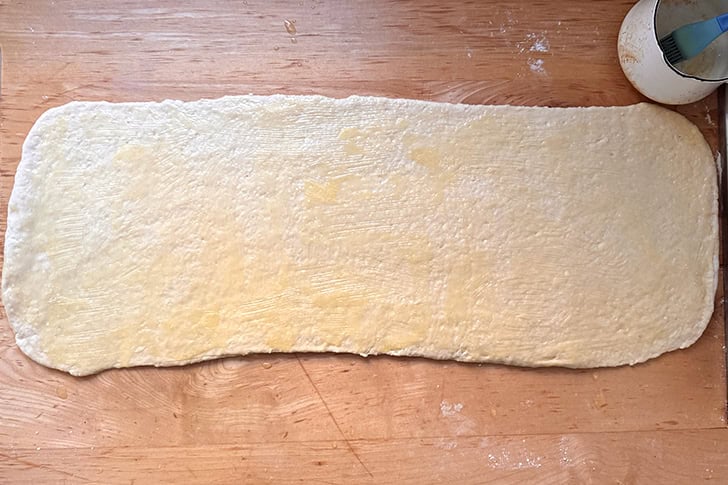
Brush it with butter:
Then top with an orange-zested, cinnamon-sugared mixture:
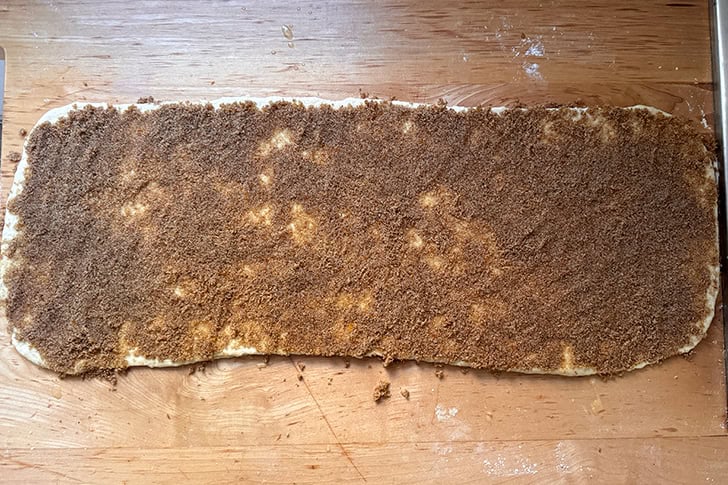
… let’s back up: to make this mixture…
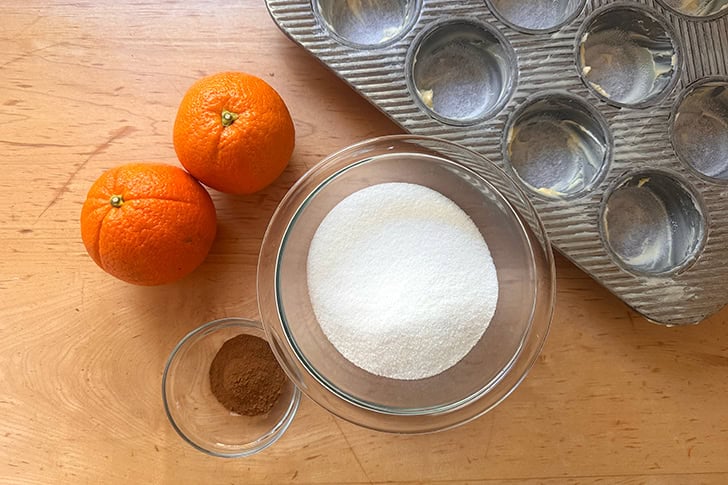
You’ll zest two oranges into a bowl of granulated sugar:
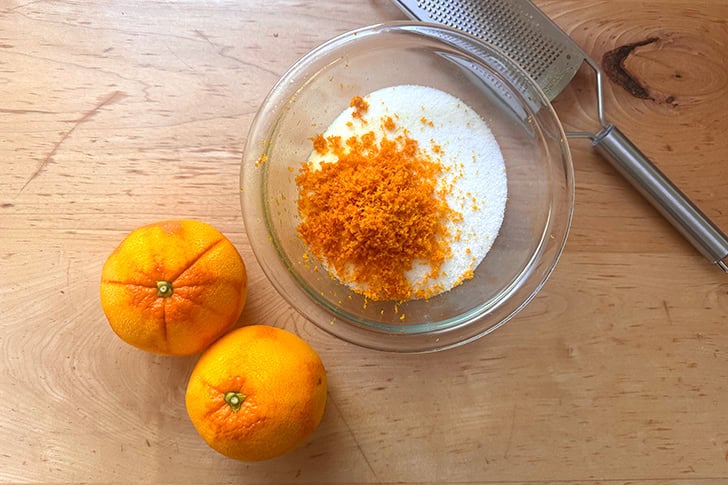
Massage the zest into the sugar…
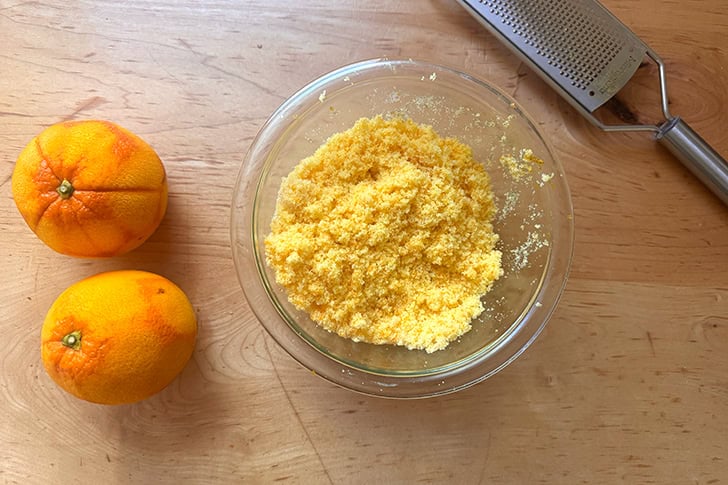
… then add the cinnamon:
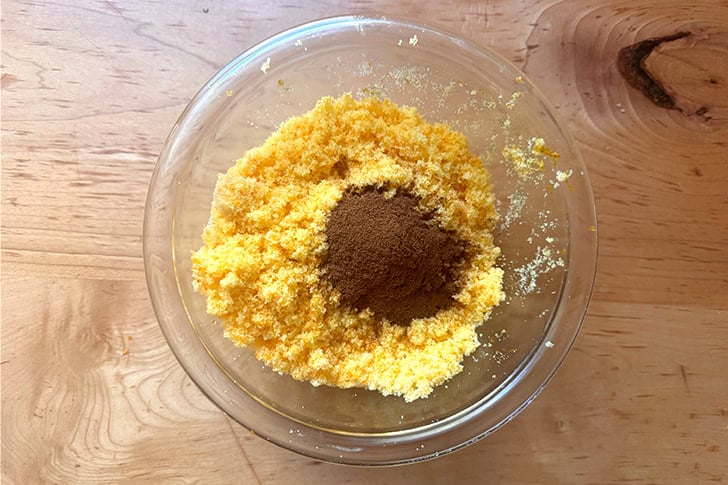
… then stir to combine:
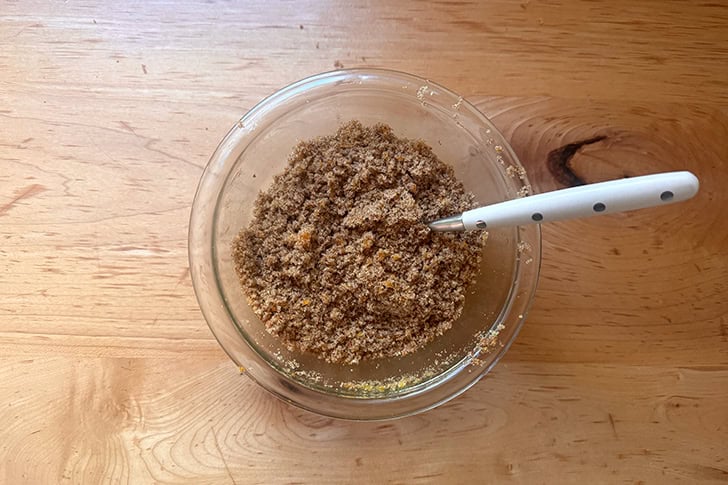
… once the sugar mixture is spread across the dough, roll it into a coil:
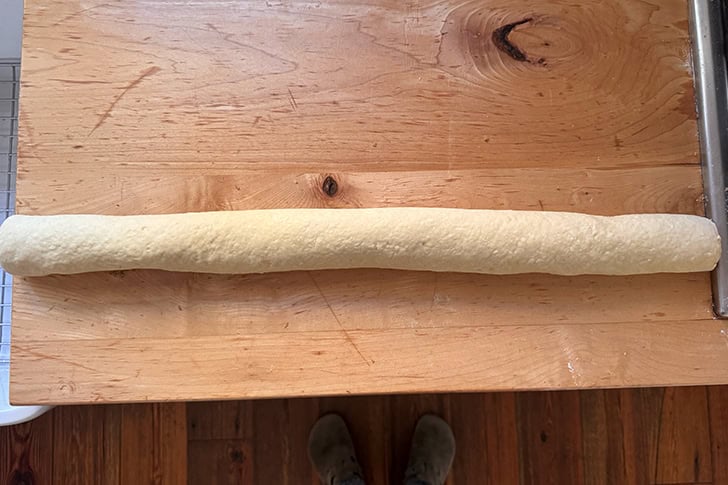
Halve it:
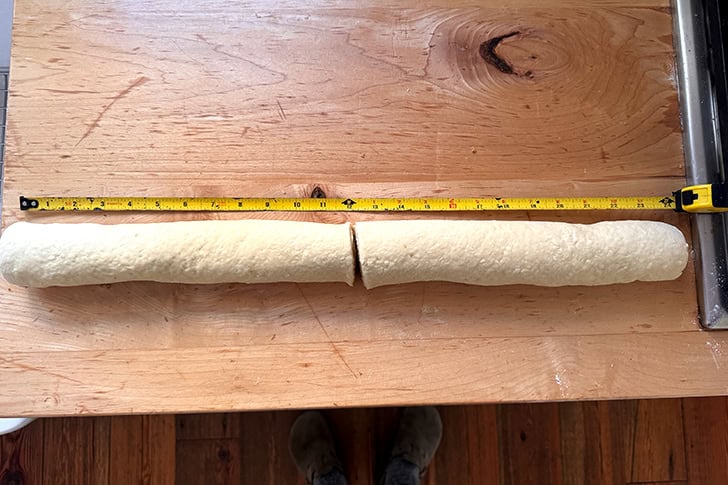
… then quarter it:
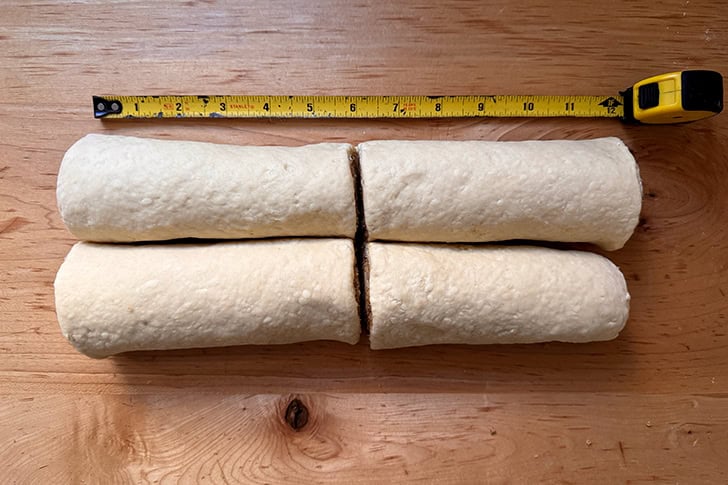
Then cut each quarter into thirds:
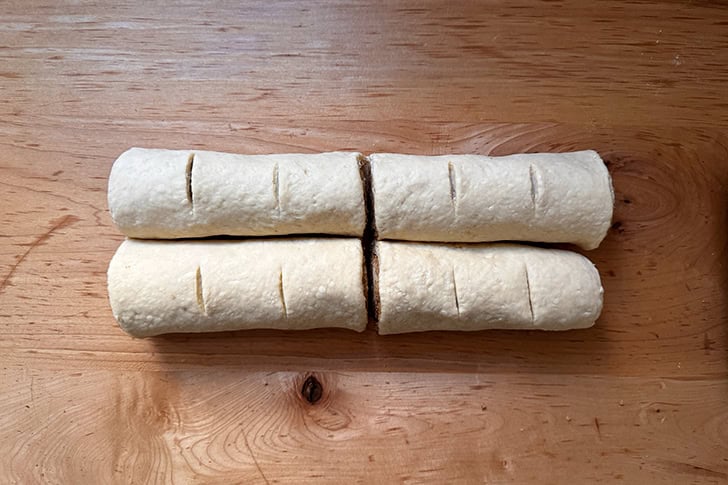
And place each third …
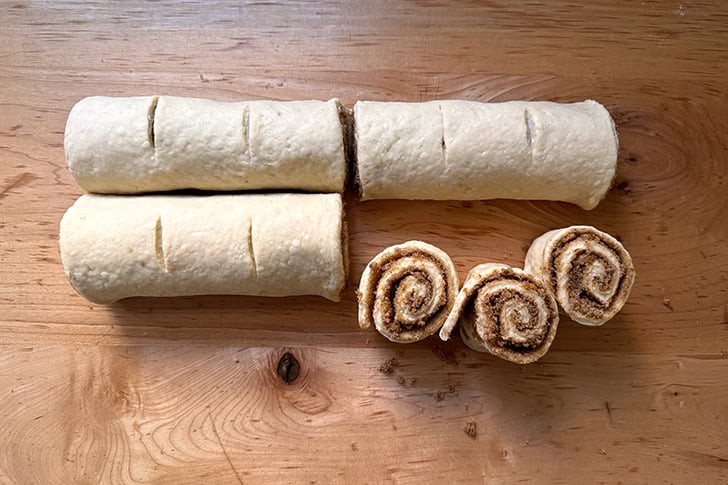
… into a buttered and sugared muffin tin:
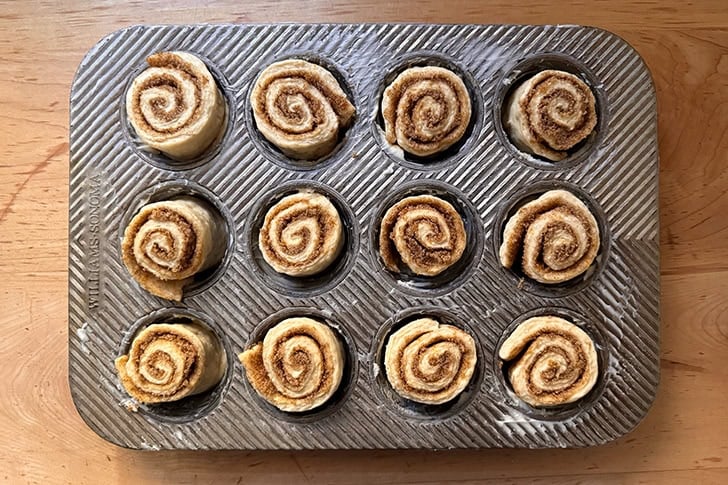
Let proof at room temperature for 2.5 hours (see recipe box for how to proof in the fridge overnight) or until the dough feels pillowy to the touch…
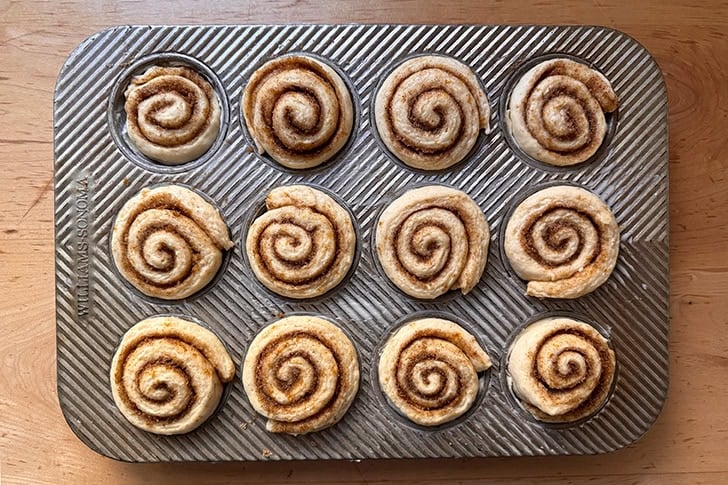
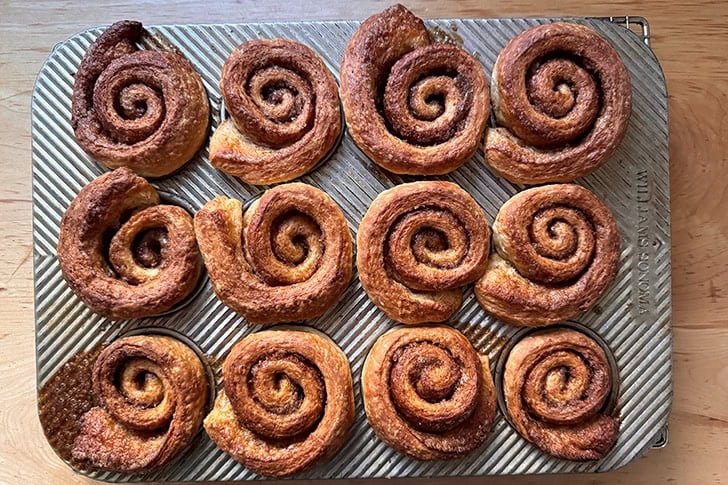
… then bake for 30 – 35 minutes @ 350ºF:
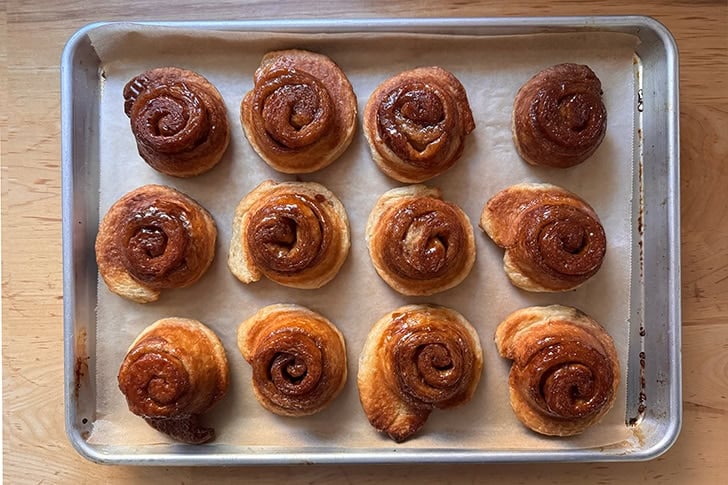
Turn the rolls out onto a parchment-lined sheet pan (see recipe instructions for details):
Then dip each bun, one by one, into a bowl of sugar:
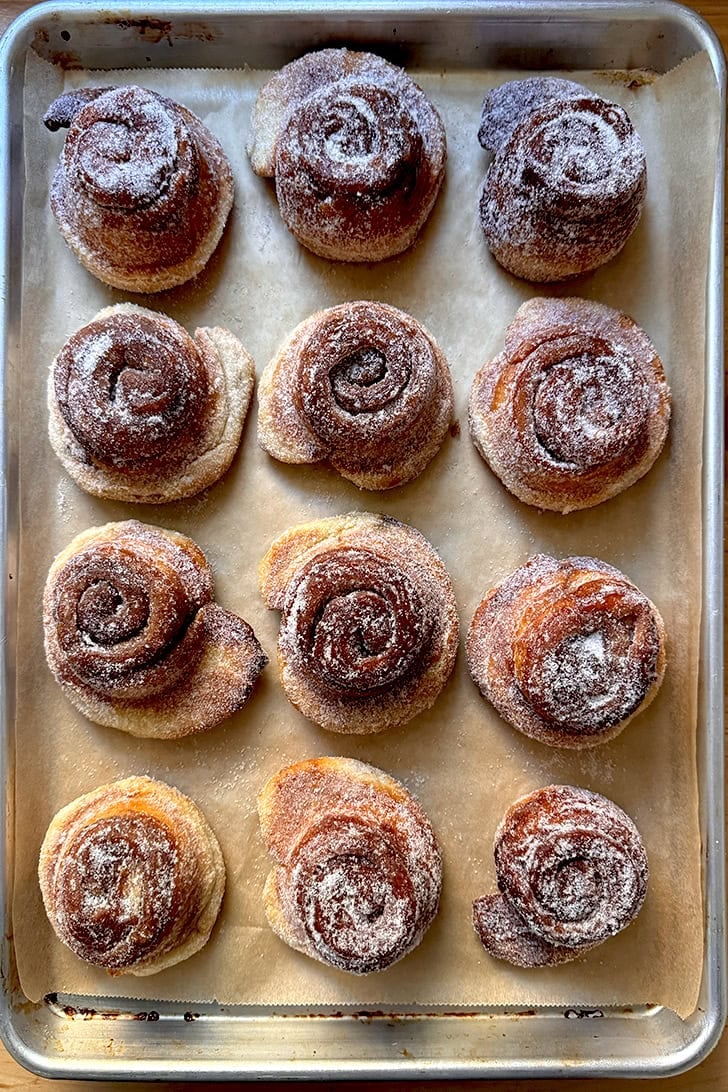
Heaven:
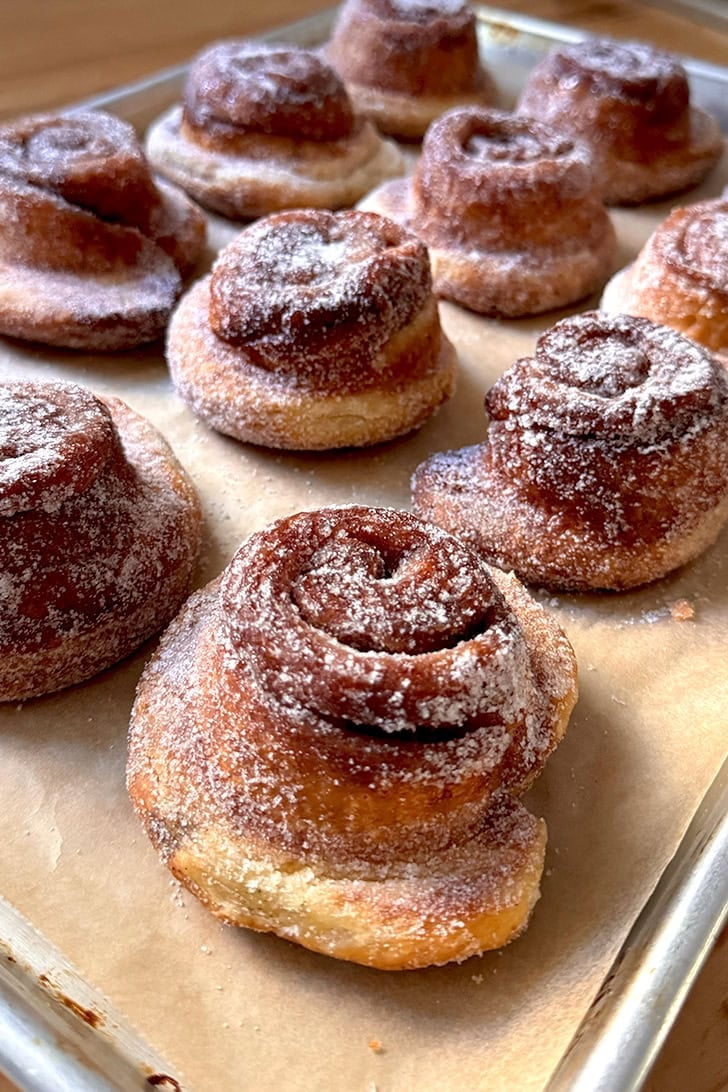
Serve immediately (or save for the future… see recipe notes for details):
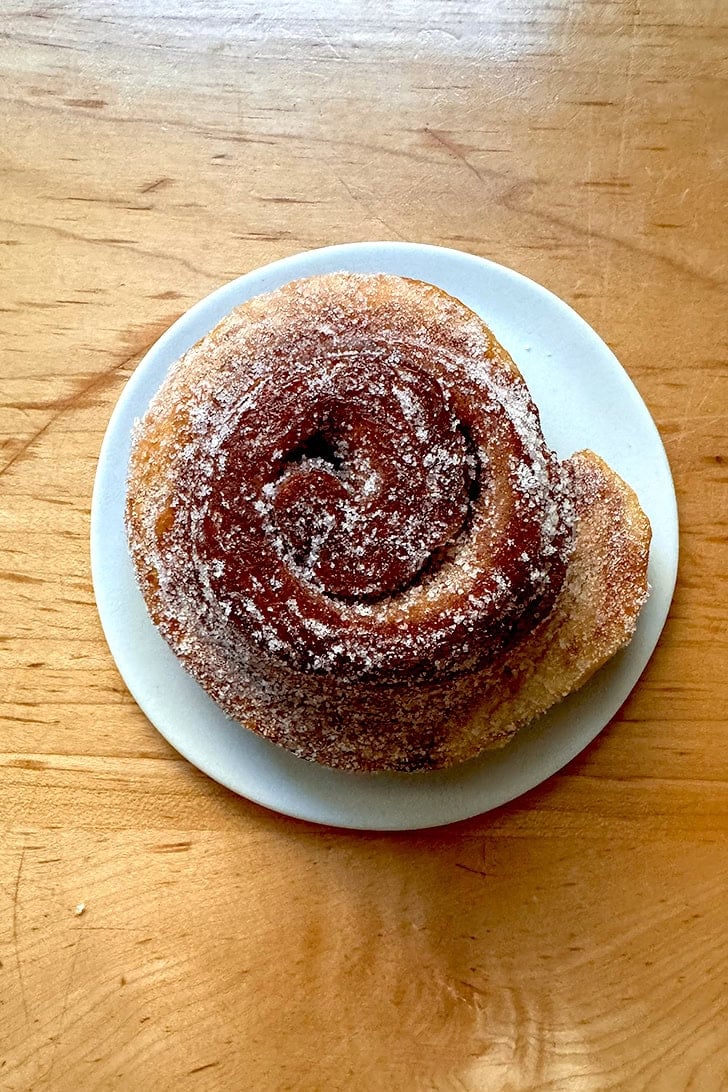

Cheater’s Morning Buns: Orange Zested, Cinnamon Sugared, Delicious and Flaky as Ever
- Total Time: 48 hours 35 minutes
- Yield: 12 buns 1x
Description
What do you get when you cross a croissant with a cinnamon roll? A morning bun, of course. Popularized by San Francisco’s beloved Tartine, morning buns traditionally require a lot of work. Below you’ll find a version made with this life-changing cheater’s croissant dough that takes no time to mix and produces a morning bun as flaky and delicious as ever. Scented with orange and cinnamon, these morning buns are heaven!
Dough recipe adapted from How to Be a Domestic Goddess; Morning Bun recipe adapted from Tartine Revised Edition and Baking for the Holidays
Notes:
Cheater’s Croissant Dough Recipe: You need the full recipe for these morning buns (made through step 3), so rather than split the dough into two portions in step 2, you’ll keep the dough whole.
Cozy Spot for Proofing: You want the assembled buns to proof in a cozy but not too cozy spot: 75ºF/23ºC — you don’t want the spot to get above 79ºF(26ºC). I like to preheat my oven for 10 seconds, then turn it off. I love these ambient temperature thermometers for accurate temperature monitoring.
Ideal Timeline:
Two days before baking: Mix the croissant dough and store it in the fridge.
One day before baking: Roll and fold the croissant dough, return it to the fridge for at least 1 hour. Assemble the morning buns (through step 4.) Place the muffin tin in a 2-gallon Ziploc bag and clamp the end closed with clips or a rubber band. Place in the fridge.
Baking day: Remove the buns from the fridge at least 3 hours before baking. Let proof in a cozy spot (see note above) until the buns feel marshmallowy to the touch, roughly 2.5 hours.
Fast Timeline:
One day before baking: Make the dough, chill it for 1 hour, roll and fold the dough, and store it in an airtight bag in the fridge for 12 hours.
On baking day: Remove the dough from the fridge and proceed with the recipe. Give yourself 4 hours total: 30 minutes to assemble the buns, 2.5 hours to let the buns proof, 30 minutes to bake.
Make them Ahead: These morning buns reheat beautifully. I have been reheating them one by one in my toaster oven as needed for the children, but you could reheat all of them on a sheet pan in your oven: preheat your oven to 350ºF (176ºC), line a sheet pan with parchment paper, place the buns on top, transfer pan to the oven and heat for 5-10 minutes, just until warmed through.
Ingredients
for the pan:
- softened butter
- sugar
for the buns:
- 1 cup + 2 tablespoons (225 grams) granulated sugar
- 2 – 4 tablespoons orange zest (from 2 large oranges)
- 1 tablespoon cinnamon
- 1 recipe cheater’s croissant dough, see notes above
- flour, for rolling
- 3 tablespoons melted butter
for finishing:
- 1/2 cup (100 grams) sugar
Instructions
- Prepare the pan: butter a 12-well muffin tin with the softened butter. Sprinkle 1/4 teaspoon sugar into each well and shake the pan to distribute the sugar along the bottom of each well.
- Make the filling: Place the 1 cup + 2 tablespoons (225 grams) granulated sugar in a medium bowl. Zest the orange directly into the sugar, then use your hands to rub the zest into the sugar until incorporated. The sugar will be tinged orange. Stir in the cinnamon.
- Roll out the dough: Using flour as needed, roll the croissant dough into a 10×24-inch rectangle. Brush with the melted butter. Spread the cinnamon-orange-sugar mixture over the dough evenly and press it gently into the dough to help it adhere.
- Assemble the buns: Starting at the long end, roll the dough into a coil to create one long 24-inch coil. Cut the dough into twelve 2-inch portions. I like to do this as follows: Cut the dough in half — I use a tape measure to locate the center. Cut each half in half again to create four 6-inch portions. Cut each of these portions into three 2-inch portions to create 12 total portions. See a visual guide above. Transfer each portion to your prepared muffin tin, so that the spiral side is facing up or down.
- Proof the buns: At this point, you can place the muffin tin in a 2-gallon Ziploc bag, clamp the end closed with clips or a rubber band, and store in the fridge for 24 hours (possibly longer). Otherwise, allow the buns to proof at room temperature or in a slightly cozy spot (see note above), covered — I use a turned-over 10×14-inch pan, but you could also lay a sheet of plastic wrap over the buns — for roughly 2.5 hours or until the buns feel marshmallowy to the touch.
- Bake the buns: Preheat your oven to 350ºF (176ºC) with a rack in the center and a rack on the bottom. Line a sheet pan with parchment paper or foil. Place this pan on the bottom rack — this is to catch any sugar that might seep out of the buns. Place your muffin tin on the center rack. Bake for 30 minutes, rotating the pan halfway. At the 20-minute mark, if no sugar is seeping out of the buns, remove the bottom pan — this will help the bottoms of the morning buns to brown better. After 30 minutes of baking, carefully lift up one of the morning buns to see if the bottom is browned and caramelized. If it is not, allow the morning buns to cook for 5 minutes more. I find 35-37 minutes in my oven is perfect: the buns are done when the tops are nicely browned and the bottoms are caramelized (see photos above).
- Finish the buns: Place the 1/2 cup of sugar in a medium bowl. Remove the pan from the oven and set on a cooling rack. Lay a sheet of parchment paper over the top. Turn over a sheet pan and lay it on top. Carefully, flip over the muffin tin to turn out the buns onto the now parchment-lined sheetpan. Working with one bun at a time, dunk each bun into the bowl of sugar and toss to coat. Return to the sheetpan and repeat with the remaining buns.
- Serving and storing: Serve immediately or store in an airtight bag at room temperature for up to 5 days. See reheating instructions above. (Note: I have a few in the freezer… I will report back on how they do.)
- Prep Time: 48 hours
- Cook Time: 35 minutes
- Category: Breakfast
- Method: Oven
This post may contain affiliate links. Please read my disclosure policy.










20 Comments on “Cheater’s Morning Buns: Orange Zested, Cinnamon Sugared, Delicious and Flaky as Ever”
Could you do this with store bought puff pastry?
I’m not sure! I don’t have much experience with puff pastry, but if you can roll it into a 10×24-inch rectangle, you should be able to proceed with the recipe. Again, since I haven’t experimented with puff pastry, I can’t say how it will turn out.
These look amazing. But is there a way to make it with store bought puff pastry?
I’m sure you could! I don’t have much experience using puff pastry, but I think if you are able to roll it into a 10×24 inch rectangle, you should be able to proceed with the recipe. Again, having not experimented using puff pastry here, I can’t say how it will turn out.
Thank you for your reply. This recipe looks amazing. I will definitely be giving it a try. Especially with all your wonderful detailed instructions.
Any advice on making these in a mini muffin pan? I’d like to take them to a meeting where we have small bites afterwards with coffee.
I love this idea! How many wells does your mini muffin tin have? I would use half the amount of dough and roll it into a thinner rectangle, maybe 5 inches by 24 inches. That way the coil theoretically will be half as thick. Use half the amount of filling. The baking time will likely be less, but rely on the visual cues.
Does this make 12 or 24 buns? Step #4 is confusing me…the pictures makes it look like 12? I just made up my cheater croissant dough, and will make my buns tomorrow! So excited. The cheater dough came together pretty well, a little sticky and messy and first, but smooth by the last fold. A bench scraper came in handy for the first folds.
Good catch!! Thank you so much 🙂 I just updated the recipe. It’s 12 buns. So glad the dough came together easily — when I did it the fast way, it was a sticky mess and a struggle for the first few sets of rolls and folds, but then, as you said, it came together smoothly. I was so happy to find the faster timeline yielded great results. I hope you love them!!
I’m confused about why removing the sheet pan after a while helps with the browning on the bottom – is that instruction relevant for a fan oven? Or does it only make a difference for a conventional oven because the sheet pan blocks the bottom heating element? Many thanks in advance!
I think it applies to all ovens actually — the pan will block some of the air. When I don’t use a pan, the bottoms brown perfectly in 30 minutes; when I use a pan, the bottoms are not done after 30 minutes. I found that by removing the pan during the second half of the baking — when it appears that no more sugar will drip from from the buns — helps with the browning.
Thank you very much for the explanation! I look forward to trying to make them this weekend 🙂
I have a question about rolling out the whole recipe of the croissant dough. Do you roll it into a 20-22 inch square instead of the 10-11 inches called for with the croissant recipe, or just have thicker layers keeping it the 10-11 inch size? Hoping to make these for the holidays — they look and sound delicious!
Great question — I have been meaning to address this. You can attempt to roll it out to 20 inches, but it will be very difficult to do so during the first pass because the butter will be in such big clumps. I suggest trying to roll out the dough as thinly as possible during the first pass, and this might only be 15 inches or so. Use flour as needed as the dough is fragile. With each pass, you’ll be able to roll the dough a little bit bigger. The second set is definitely still a little fragile, but I find by the third set, the dough begins coming together and is easier to roll to a much larger rectangle. If you can get it to 20 inches by the third set, that’s great. You should be able to by the fourth set.
These are amazing! I wanted to see if it was possible to have these fresh out of the oven in the morning without having to get up for the long rise. I par baked them the night before and refrigerated them and then baked them the rest of the time in the morning. They might not have been as perfect in appearance. But they sure were good and nobody cared. I am also thinking I might substitute orange juice for the water in the initial dough. Any thoughts?
(tried to attach photo.. But was unsuccessful )
I’m so happy to hear this, Sara! Love the idea of a parbake to be able to enjoy them freshly baked in the morning.
Question, re orange juice in the dough, are you looking for a more pronounced orange flavor?
I guess I thought there would be more of a citrus flavor from the zest. So I guess the answer is yes. Thanks
Got it! I think you should try adding more zest to the dough. Or using half orange juice, half water. I just worry about the acidity of the orange juice and the added sugar potentially causing issues with the dough.
Oh. My. Gosh!!! These are so good!!! And such fun to make. I used half the dough to “test” and well, now I’m sorry I didn’t make all 12. I will definitely make again – and look forward to hearing if freezing the baked rolls works (because I certainly won’t have any leftovers to experiment with!!!)
I’m so happy to read this, Mariposa! Thanks so much for writing. I will test out the frozen morning bun soon and report back 🙂